Control Your Emotions: A Designer’s Embroidery Review
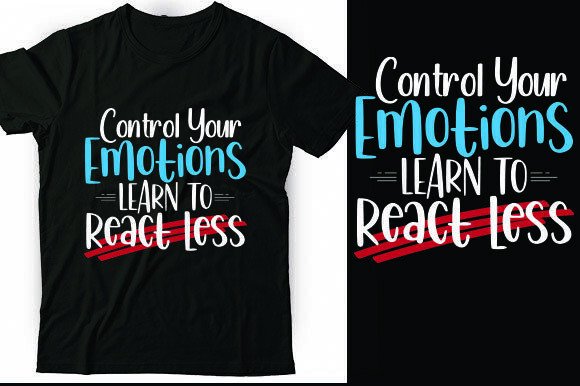
As an embroidery designer who has spent years translating digital vectors into tangible thread, I have learned that the most impactful designs are often the simplest. Typography-driven pieces require a delicate balance between legibility and aesthetic flow. Recently, I evaluated Control Your Emotions. Learn to React Le, a text-based graphic available as part of a Freebies collection. While the title appears truncated in some listings, the core message—"Control Your Emotions. Learn To React Less"—resonates deeply with current mindfulness trends. This review explores how this design performs in real-world applications, from custom apparel to boutique home goods, offering practical insights for crafters and small business owners.
First Impressions: Mood and Visual Personality
The immediate appeal of Control Your Emotions. Learn to React Le lies in its calming authority. The typography suggests a modern, clean sans-serif style, which is ideal for machine embroidery where clarity is paramount. Unlike intricate floral motifs or complex applique design elements, text-heavy graphics rely entirely on spacing and font weight. In my initial assessment, the layout feels balanced, offering enough negative space to prevent the stitches from merging into an unreadable blob. This visual personality fits seamlessly into the "wellness" and "self-care" niches that dominate Etsy seller catalogs and handmade product markets today.
For embroidery designers, the simplicity of this graphic is both a blessing and a challenge. It lacks the decorative distractions of a satin stitch border or a dense fill stitch background, meaning every letter must be perfect. The mood is introspective and mature, making it unsuitable for childish or overly whimsical projects but perfect for adult-focused custom apparel and home decor.
Real-World Application: The Tote Bag Test
To truly understand the viability of Control Your Emotions. Learn to React Le, I visualized it on a heavy canvas tote bag. This is a common project for small shop products and craft fair items. On a textured fabric like canvas, the design needs sufficient stitch density to stand out without sinking into the weave. I imagined using a contrasting thread color, such as a deep charcoal on natural cotton, to maximize readability.
In this scenario, the design acts as a statement piece. It transforms a generic bag into a personalized gift that speaks to the user’s lifestyle. For an Etsy seller, this type of embroidery project offers high perceived value because it combines utility with emotional resonance. However, the length of the phrase requires careful placement. Centering it too low on the bag might cause distortion when the bag is filled, so positioning it in the upper third is crucial for maintaining the integrity of the finished product.
Sweatshirts and Custom Apparel
Another strong candidate for this design is sweatshirt embroidery. Here, the fabric texture changes the game. Fleece and French terry are thick and plush, requiring a robust stabilizer to prevent puckering. When digitizing or preparing this file for a cap or sweatshirt, one must consider the stretch of the fabric. If the design is too wide, it may distort across the chest. I recommend testing the design on scrap fabric first, specifically checking how the horizontal span of "Control Your Emotions. Learn to React Less" behaves on stretchy materials. A running stitch outline might help anchor the letters before the main fill stitches are applied, ensuring crisp edges.
Navigating Technical Challenges
While the concept is strong, executing Control Your Emotions. Learn to React Le requires attention to technical details. Text designs are notorious for causing issues in small hoop sizes. If you attempt to shrink this design for a baby embroidery project, such as a onesie or a small patch, the smaller letters in "React Less" may become illegible. The stitches could merge, creating a messy appearance that undermines the professionalism of your brand consistency.
Furthermore, curved surfaces like caps present unique challenges. The curvature can distort straight lines of text. For hat embroidery, I advise breaking the phrase into two lines or reducing the overall width significantly. Always inspect small details after a test run. If the thread colors do not contrast sharply with the fabric, the message gets lost. This is particularly true for dark fabric; using a light thread is essential, but you must ensure the stitch density is high enough to cover the underlying material completely.
File Formats and Preparation
The product description indicates that you will receive this design in several formats: High Quality JPG, Editable AI, SVG, and Transparent PNG. It is vital to note that these are primarily graphic files, not native machine embroidery files like PES or DST. For embroidery designers, this means you will need to digitize the SVG or AI file yourself or use auto-digitizing software with caution. Auto-digitizing often fails with text, creating excessive underlay or poor stitch paths. Manual digitizing allows you to control the stitch direction, ensuring that the satin stitch or fill stitch follows the natural flow of the letters.
Before selling finished items or digital embroidery assets, confirm the licensing terms. Since this is listed under Freebies, usage rights can vary. Some creators allow commercial use for physical products but restrict the resale of the digital file itself. Always read the specific license included with the download to protect your craft business from legal issues.
Enhancing Visual Appeal and Brand Value
When used correctly, Control Your Emotions. Learn to React Le enhances the visual appeal of any product. It adds a layer of sophistication to holiday embroidery gifts, such as aprons for the cook who needs a moment of zen, or pillow covers for a meditation corner. For boutique branding, this design aligns well with minimalist aesthetics. It signals to the customer that the maker values quality and thoughtfulness.
To maximize buyer engagement, present the design in realistic contexts. Use printable mockup tools to show the embroidery on various items before stitching. Compare light and dark fabric backgrounds in your marketing images to demonstrate versatility. Highlight the clarity of the stitching in close-up shots to build customer trust. A well-executed text design reflects positively on your skills as a maker, distinguishing your small shop product from mass-produced alternatives.
Practical Notes for the Embroiderer
- Stabilizer Selection: Use a cut-away stabilizer for stretchy fabrics like t-shirts and sweatshirts to prevent long-term distortion. For woven fabrics like tote bags, a tear-away may suffice if the stitch density is moderate.
- Thread Choice: Select high-quality polyester or rayon threads that offer a slight sheen, enhancing the readability of the text against matte fabrics.
- Test Stitching: Always run a test on similar fabric scraps. Check for thread breaks, especially in tight corners of letters like 'E' and 'R'.
- Hoop Size: Ensure your hoop is large enough to accommodate the full phrase without re-hooping, which can lead to misalignment.
- Commercial Use: Verify if the license permits use in commercial embroidery projects. If selling on Etsy, clear disclosure of the design source can sometimes be a requirement depending on the platform's policies.
In conclusion, Control Your Emotions. Learn to React Le is a versatile and meaningful addition to your library of design assets. While it requires careful handling regarding digitization and fabric selection, its potential for creating impactful, personalized gifts and best-selling shop items is significant. By respecting the technical constraints of text embroidery and leveraging the emotional weight of the message, you can create finished products that resonate deeply with your audience.