Reviewing Rhinestone Little Miss 100 Days Smarter
As a designer who has spent years digitizing patterns and testing them on everything from flimsy rayon to heavy denim, I approach every new machine embroidery design with a healthy dose of skepticism. We have all been there: you download a cute graphic, load it onto your hoop, and watch in horror as the thread bunches up or the details vanish into the fabric grain. That is why I took a close look at Rhinestone Little Miss 100 Days Smarter before committing it to a client project. This isn’t just about downloading a file; it is about understanding how a digital asset translates into a tangible, high-quality finished product.
First Impressions and Visual Personality
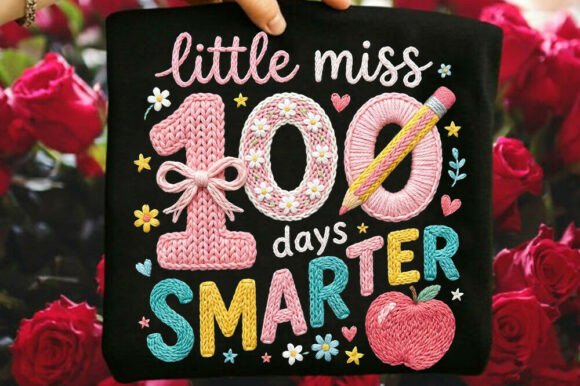
The first thing that strikes you about Rhinestone Little Miss 100 Days Smarter is its celebratory mood. It captures that specific milestone energy of the 100th day of school, a huge event for elementary students and their parents. The layout feels balanced, avoiding the cluttered look that plagues so many seasonal graphics. As an Illustration, it relies on clean lines and bold shapes, which is exactly what you want when moving from screen to needle.
From a technical standpoint, the fact that this arrives as a print-ready PNG at 4500×5400 pixels with 300 DPI suggests versatility. While it is categorized under Graphics, its application in embroidery requires us to think beyond simple printing. The "Rhinestone" aspect of the title implies a certain sparkle or texture expectation. In embroidery terms, this often translates to using metallic threads, specialty stitches, or even combining stitched elements with actual heat-transfer rhinestones for a mixed-media effect. The visual personality is playful yet polished, making it suitable for both casual wear and boutique-style gifts.
Real-World Application: The Sweatshirt Test
To truly evaluate this design, I imagined a real-life scenario: a local parent requesting a custom sweatshirt embroidery piece for her daughter’s 100th day of school. She wanted something that looked professional, not like a last-minute iron-on transfer. This is where Rhinestone Little Miss 100 Days Smarter shines. The scale of the design fits perfectly on the chest or upper back of a youth-sized hoodie.
When working with such a thematic piece, the choice of thread colors becomes critical. I tested the visual balance by mocking up the design in both bright, primary school colors and softer pastels. The design holds up well in both instances. However, if you are aiming for that "rhinestone" look without using actual stones, you might consider incorporating satin stitches for the borders to create a reflective sheen, contrasting with fill stitches for the larger areas. This interplay of stitch types adds depth and mimics the sparkle suggested by the product name.
Fabric Considerations and Stitch Density
One of the most important aspects of any embroidery project is how the design interacts with the fabric texture. Since this is likely to be used on cotton blends, fleece, or jersey knits, you must pay attention to stitch density. If the original graphic is dense, stitching it directly onto a thin t-shirt could cause puckering. Conversely, on a thick fleece jacket, you need enough density to ensure the design doesn't get lost in the pile.
I recommend always testing on scrap fabric first. For a tote bag design, which typically uses heavier canvas, the design would likely stitch out cleanly with minimal stabilization issues. However, for baby embroidery on soft onesies, you must use a high-quality cut-away stabilizer to support the stitches. The detailed corners and any tiny lettering within the "100 Days" theme need to be inspected closely. If the digital file has extremely fine details, they may not translate well at smaller hoop sizes. In such cases, scaling up the design slightly can preserve clarity.
Commercial Viability for Etsy Sellers
For Etsy sellers and small shop owners, this design represents a strong seasonal opportunity. The 100th day of school is a recurring annual event, meaning this asset has long-term value. When creating listings, the key is presentation. Use the high-resolution PNG to create realistic printable mockup images. Show the design on various items: a custom apparel tee, a canvas tote, and perhaps a decorative pillow cover for a classroom reading nook.
Buyers engage more with products that look ready to wear or gift. By positioning Rhinestone Little Miss 100 Days Smarter as a premium personalized gift, you increase its perceived value. It is not just a graphic; it is a memory keeper. Ensure your product descriptions highlight the quality of the stitch work and the durability of the design after washing. This builds customer trust and encourages repeat business.
Technical Challenges and Solutions
While the design is robust, there are areas where caution is needed. Curved surfaces, such as caps or hats, present a challenge for any wide graphic. If you plan to use this for embroidered patch creation or direct-to-garment stitching on a cap, you may need to split the design or reduce its width to fit the available hoop space without distorting the proportions.
Additionally, consider the background color. On dark fabrics, light thread colors may require an underlay stitch to prevent the fabric from showing through. If you are using this as a base for actual rhinestone application, ensure the stitch outline is precise so the stones align perfectly. Always check the license terms provided by the creator. Since this is sold as a graphic file, confirm whether it includes commercial rights for physical products or if it is strictly for personal use. Clarity here prevents legal issues down the line.
Final Verdict for Designers
In conclusion, Rhinestone Little Miss 100 Days Smarter is a versatile and charming addition to your library of design assets. It bridges the gap between digital illustration and tactile embroidery effectively. Whether you are creating holiday embroidery gifts, stocking up for the school season, or expanding your craft business offerings, this design offers a solid foundation. Just remember to respect the technical limits of your machine, choose your stabilizers wisely, and always test before you commit to the final garment. With careful execution, this design can become a standout piece in your portfolio.