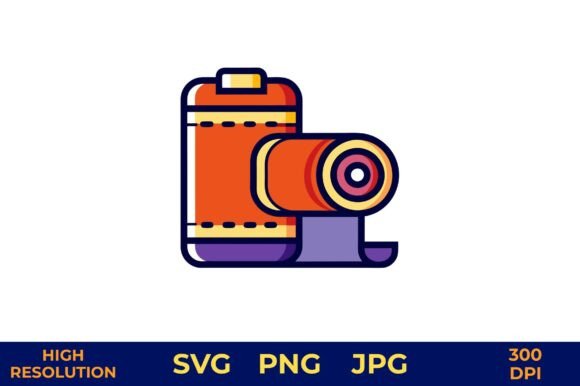
Film Roll and Backpack Vector Design Review
As a designer who spends half my life digitizing files and the other half watching them stitch out on fabric, I have learned that not every pretty picture translates into a quality embroidery project. When I first pulled up the Film Roll and Backpack Vector Design, my initial reaction was one of cautious optimism. The concept is charming—a nostalgic nod to analog photography paired with the universal symbol of adventure, the school backpack. But charm alone does not make a viable product for a craft business. We need to look at line weight, color separation, and how this Illustrations category asset behaves when converted from pixels to thread.
First Impressions and Visual Mood
The immediate mood this design evokes is playful yet retro. It feels like a perfect fit for the current trend of "dark academia" meets modern travel. For an Etsy seller or a boutique owner, this visual personality is gold. It appeals to photographers, students, and travelers alike. However, looking at it as a set of Graphics, I noticed the colorful nature of the vector. In embroidery, color is expensive in terms of time and thread changes. The design relies on distinct blocks of color to define the film roll canister and the backpack straps. This suggests that if you are digitizing this yourself or using an auto-digitized version, you must be careful with stitch density. Too dense, and the fabric puckers; too light, and the backing shows through.
Real-World Application: The Custom Tote Bag Test
To truly evaluate this design, I imagined applying it to a heavy canvas tote bag design. This is perhaps the most natural home for this artwork. The sturdy texture of canvas can handle the weight of the stitches required to fill in the backpack shape. I pictured a customer ordering a personalized gift for a photography student. The film roll represents their passion, and the backpack signifies their journey. When stitched correctly, this becomes more than just a decoration; it becomes a statement piece.
I also considered its use on a denim jacket or a structured sweatshirt embroidery project. Here, the fabric texture plays a huge role. Denim has a twill weave that can distort small details. If the vector lines for the film sprockets are too thin, they might get lost in the fabric grain. I would recommend using a cut-away stabilizer to ensure the design remains crisp and does not warp after washing. For a handmade product intended for daily use, durability is just as important as aesthetics.
Navigating Technical Challenges
While the concept is strong, there are areas where the Film Roll and Backpack Vector Design requires careful handling. The primary concern is the level of detail in the film roll. In vector format, these lines are infinitely sharp. In embroidery, we are limited by the thickness of the thread and the mechanics of the needle. Tiny details, such as the text on the film canister or the intricate buckles on the backpack, may need simplification. If you are using this as a base for an applique design, you could mitigate this by using fabric patches for the larger shapes and only stitching the outlines. This reduces stitch density and creates a cleaner, more professional look.
Another critical factor is the hoop size. This design likely requires a medium to large hoop, such as a 5x7 or 6x10 inch frame, to maintain its proportions without shrinking the details into illegibility. Attempting to shrink this down for a small embroidered patch or a baby hat could result in a muddy, indistinct image. Always test the design on scrap fabric of the same type you intend to use for the final product. Check the thread colors against your fabric choice. High contrast is key. A dark backpack on a navy shirt will vanish, whereas a bright film roll on a white tote will pop.
Commercial Viability and Customer Appeal
For those running a small shop product line, this design offers versatility. It fits seamlessly into categories like back-to-school merchandise, travel accessories, and hobby-specific gifts. The "travel and photography themes" mentioned in the description are evergreen niches. Customers love items that reflect their identity. A well-executed version of this design on a custom apparel item can command a higher price point because it feels bespoke and thoughtful.
However, remember that you are selling a finished product, not just a stitch-out. The presentation matters. Use high-quality printable mockup images to show potential buyers how the design looks on different items. Show it on a backpack, a pillow cover, and a tea towel. This helps customers visualize the end result and increases buyer engagement. As an Etsy seller, your listing photos are your storefront. A blurry photo of a poorly stabilized stitch-out will hurt your brand consistency and customer trust.
Practical Designer Notes for Execution
Before you commit to producing inventory, take these practical steps. First, verify the file formats. The description states you get SVG, PNG, and JPG files. Note that these are design assets for printing or digital use, not necessarily machine-readable embroidery files like PES or DST. You will likely need to digitize this vector into an embroidery file using software like Wilcom, Hatch, or Embrilliance. If you are not a digitizer, hire one who understands how to convert clean vector lines into efficient stitch paths.
- Test on Scrap Fabric: Always run a test stitch-out on the actual material you plan to sell. Check for puckering, thread breaks, and registration issues.
- Check Thread Contrast: Ensure your thread colors stand out against the fabric. Use a color chart to match the vibrant vector colors as closely as possible.
- Review Stitch Density: Adjust the density based on the fabric. Thinner fabrics need less density to prevent stiffness; thicker fabrics can handle more coverage.
- Confirm Hoop Size: Ensure your machine’s hoop can accommodate the design dimensions without resizing it to the point of distortion.
- Inspect Small Details: Zoom in on the digitized file. Are the tiny elements of the film roll recognizable? If not, simplify them or remove them.
- Licensing Check: Confirm the license terms. Can you use this for commercial sales? Most vector purchases allow for physical product sales, but always read the fine print before listing items for sale.
Final Verdict on the Design
The Film Roll and Backpack Vector Design is a solid choice for designers looking to expand their catalog with lifestyle-oriented imagery. It bridges the gap between hobbyist passion and everyday utility. While it requires thoughtful digitizing and careful material selection to shine as an embroidery piece, the potential for creating appealing personalized gift items is high. Whether you are making holiday embroidery for photographers or baby embroidery for trendy parents, this design provides a strong foundational graphic. Just remember that the difference between a good design and a great product lies in the execution. Take the time to refine the stitch path, choose the right stabilizer, and present your work professionally. That is how you turn a simple vector into a best-selling commercial embroidery asset.